+86-0571-82795522

 LANGUAGE
  English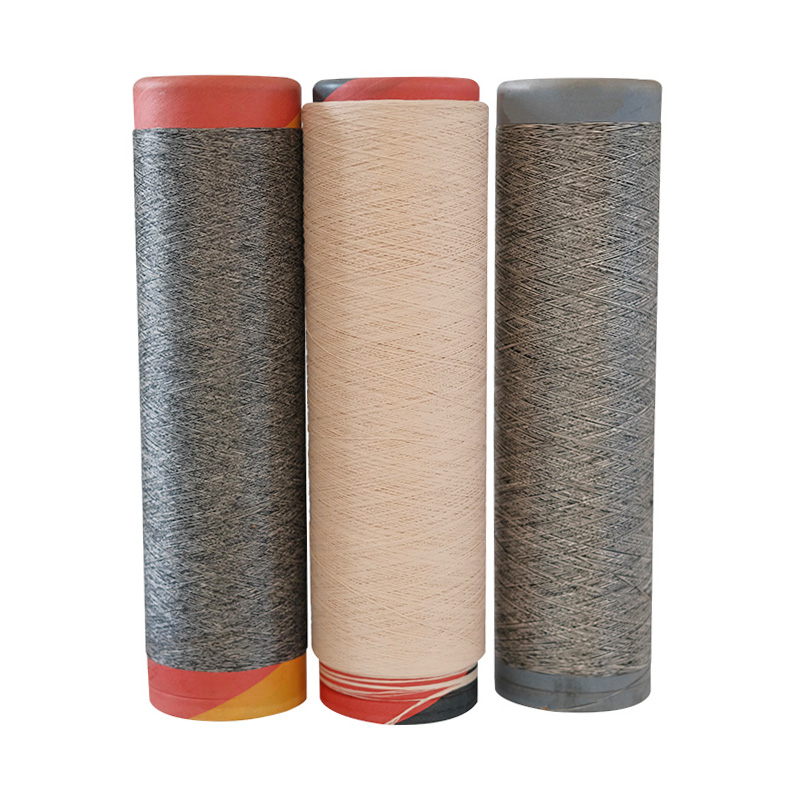
The evolution of functional textiles has placed composite differentiated yarn at the forefront of high-performance sportswear engineering. Unlike conventional single-structure fibers, this advanced material class integrates multiple polymer types, cross-sectional geometries, or additive treatments into a single yarn strand. The result is a tailored balance of mechanical strength, thermal regulation, and moisture transport—properties essential for athletes and active wearers. Understanding how composite differentiated yarn transforms sportswear requires examining its structural diversity, application-specific benefits, and integration into garment systems.
Structural Foundations of Composite Differentiated Yarn
Composite differentiated yarn is defined by deliberate heterogeneity. Manufacturers achieve differentiation through three primary routes: bicomponent spinning (sheath-core, side-by-side, or islands-in-the-sea configurations), physical morphology alteration (hollow, trilobal, grooved profiles), or chemical variation (hydrophilic versus hydrophobic segments within one yarn). Each approach yields distinct performance characteristics.
The table below summarizes common structural types and their sportswear-relevant functions.
| Yarn Structure Type | Differentiation Method | Primary Benefit in Sportswear |
|---|---|---|
| Sheath-core bicomponent | Hydrophilic sheath / hydrophobic core | Rapid sweat transport without cling |
| Hollow filament | Continuous internal void | Lightweight insulation or moisture channeling |
| Trilobal profile | Non-round cross-section | Increased surface area for wicking and soft feel |
| Islands-in-the-sea | Dissolvable sea component | Ultra-microfibers for breathable barriers |
| Grooved surface | Longitudinal channels | Capillary action for liquid spreading |
This structural library forms the basis of a composite differentiated yarn series, where each variant addresses a specific athletic demand—from base layer comfort to outer shell durability.
Moisture and Thermal Regulation in Active Wear
The most immediate application of composite differentiated yarn lies in sweat management. In high-exertion sports, liquid moisture next to skin increases friction, reduces evaporative cooling, and promotes chafing. A well-designed composite differentiated yarn uses differential wetting: hydrophilic component pulls moisture away from the skin, while hydrophobic sections keep the fabric interior dry. For example, a sheath-core yarn with a hydrophilic polyamide shell and a polypropylene core can achieve unidirectional moisture transport. The shell absorbs sweat, the core remains non-absorbent, and capillary gradient drives liquid outward. Garments made from such yarns dry significantly faster than single-polymer equivalents.
Thermal regulation extends beyond moisture. Hollow composite differentiated yarn traps stationary air within the filament, providing insulation without bulk. This is particularly useful for cold-weather base layers or transition-season running tops. Conversely, trilobal or cruciform cross-sections increase fiber surface area, accelerating evaporative cooling in hot environments. By selecting appropriate variants from a composite differentiated yarn series, designers can target specific thermal zones—for instance, a mesh back panel with high-surface-area yarns alongside a smoother, abrasion-resistant front panel.
Mechanical Durability and Stretch Recovery
High-performance sportswear undergoes repeated tensile stress, abrasion, and laundering. Composite differentiated yarn addresses durability through strategic polymer pairing. A common engineering solution uses a high-tenacity core (e.g., polyester or aramid) with a softer, touch-optimized sheath. This maintains fabric strength while preserving next-to-skin comfort. Elastomeric components can be integrated into composite structures as well. Side-by-side bicomponent yarns with different shrinkage potentials create natural crimp and stretch without relying on separate elastane wraps. Such yarns offer superior recovery from stretching, reducing bagging at knees and elbows.
Abrasion resistance is another critical factor. In contact sports or gear-intensive activities (e.g., climbing or cycling), composite differentiated yarn can incorporate wear-resistant polymers at the fiber surface while keeping the interior flexible. This zoning protects high-friction zones like shoulders, seat areas, and cuffs.
Strategic Placement and Garment Zoning
Not every part of a sportswear garment requires identical performance. Smart usage of composite differentiated yarn involves zoning—placing different yarn variants in different panel areas. A running singlet might employ:
- A grooved-surface composite differentiated yarn in the chest and back for rapid sweat spreading.
- A hollow yarn in the shoulder straps for light cushioning against backpack pressure.
- A sheath-core moisture-management yarn in the underarm panels for odor control (by reducing bacterial growth media).
This zoning approach reduces unnecessary weight and cost because expensive multifilament composites are used only where needed. Seamless knitting technologies further enable gradient transitions between zones, eliminating chafing seams.
Breathability and Air Permeability
High-performance sportswear must balance moisture removal with airflow. Composite differentiated yarn can create micro-channels within the fabric structure without requiring large mechanical pores. For instance, islands-in-the-sea yarns, after partial removal of the “sea” component, produce a multifilament bundle with nano-scale voids. These voids allow vapor transmission while blocking liquid droplets—a principle used in wind-resistant yet breathable softshell fabrics. Such materials outperform conventional laminates in flexibility and wash durability.
Another approach uses differential shrinkage. Blending two composite differentiated yarn series with different thermal shrinkage rates in the same fabric, then heat-treating, creates permanent micro-corrugations. These textures lift the fabric slightly away from the skin, reducing cling and improving air circulation.
Chemical and Biological Performance Add-ons
Composite differentiated yarn serves as an ideal carrier for functional additives that would otherwise wash out quickly. Instead of topical finishes, additives can be embedded in one component of a bicomponent yarn. For example:
- Silver-ion or copper additives in the core polymer stay protected from abrasion, providing long-lasting antimicrobial activity.
- Phase-change material (PCM) microcapsules in the sheath offer thermoregulation without affecting fiber strength.
- UV-stabilizers incorporated into one polymer layer enhance sun protection without altering hand feel.
Because these additives are not surface-coated, they resist laundering far longer than conventional finishes. This durability meets the high-laundering demands of professional sportswear.
Seam Integration and Comfort
Seams are the weakest points in sportswear for both comfort and durability. Composite differentiated yarn can be engineered specifically for stitching. A yarn with a low-friction additive or a slightly softened sheath reduces needle heat and fabric puckering. When used in flatlock or cover seams, such yarns lower skin irritation—a critical factor for marathon and triathlon apparel where repetitive motion amplifies seam friction.
Additionally, the same composite differentiated yarn series used in the main fabric can be employed for stitching, ensuring uniform shrinkage and dye uptake. This eliminates the common problem of contrasting seam tightness after washing.
Lightweighting and Packability
Reducing garment weight without sacrificing function is a perpetual goal. Hollow composite differentiated yarn reduces density by 15–25% compared to solid fibers of the same polymer. When combined with open fabric structures, the resulting material packs into small volumes—ideal for race-day gear, packable jackets, and travel-friendly athletic wear. Furthermore, the air-trapping capability of hollow fibers adds thermal value per gram, allowing thinner fabrics to perform like heavier ones.
Environmental and Processing Considerations
While performance is paramount, processing efficiency matters for adoption. Composite differentiated yarn is designed for compatibility with standard circular knitting, warp knitting, and weaving equipment. However, dyeing and finishing require precise control to avoid differential polymer interactions. Many manufacturers pre-shrink or heat-set the yarns before fabric formation to stabilize dimensions. A well-specified composite differentiated yarn series includes processing guidelines for temperature, tension, and chemical exposure, reducing mill reject rates.
From an environmental standpoint, composite structures can reduce the need for blending separate yarns in later stages, simplifying recycling streams if the same polymer family is used. For example, all-polyester sheath-core composites are mechanically recyclable more easily than mixed-fiber fabrics.
Frequently Asked Questions (FAQ)
Q1: What makes composite differentiated yarn different from blended yarn?
Blended yarn mixes separate staple fibers (e.g., cotton-polyester) after spinning. Composite differentiated yarn integrates different polymers or geometries into one continuous filament during extrusion. This allows precise zoned properties—such as a hydrophobic core with a hydrophilic sheath—unachievable with simple blending.
Q2: Can composite differentiated yarn be used in all types of sportswear, from base layers to outer shells?
Yes. A complete composite differentiated yarn series includes variants for each layer: soft, moisture-wicking yarns for base layers; stretch-recovery yarns for mid-layer compression; and abrasion-resistant, hollow yarns for lightweight outer shells. The key is matching yarn structure to garment position.
Q3: Does apparel made from composite differentiated yarn require special care?
Generally, no. Most composite differentiated yarn sportswear can be machine-washed cold and tumble-dried low. However, garments containing easily hydrolyzable components (e.g., certain bio-polymers or PCM additives) should follow the manufacturer’s instructions. Avoiding fabric softeners is recommended, as they can coat differential surfaces and reduce moisture transport.
Q4: How does composite differentiated yarn control odor in sportswear?
By two mechanisms. First, rapid moisture wicking denies bacteria the wet environment needed to proliferate. Second, antimicrobial additives can be permanently embedded into one polymer component of the yarn. Because the additive is not a surface finish, it remains active after many washes.
Q5: Is composite differentiated yarn more expensive than standard performance yarns?
Initial yarn cost is typically higher due to complex extrusion tooling and quality control. However, system-level economics often favor composite yarns because they reduce downstream steps—fewer separate yarn types to inventory, less layering, and longer garment life. For high-performance applications, the value gained in durability and function offsets the marginal material cost increase.